CHIROPRACTIC CARE FOR VETERANS: WHY DOCTORS OF CHIROPRACTIC SHOULD BE ON THE FRONT LINES OF THE INTEGRATED CARE TEAM

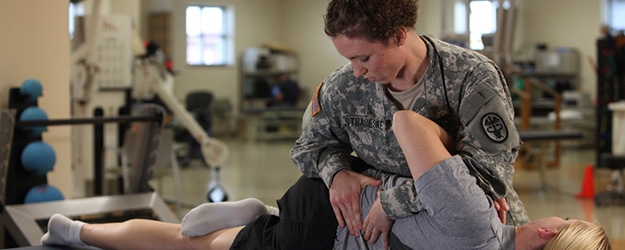
Military life requires many physical challenges. The physical stresses of carrying heavy loads, running with body armor and jumping out of planes can often have a long-term impact on a person’s body. It shouldn’t come as a surprise that many Veterans suffer from chronic pain from the lingering effects of active duty.

Of the millions of patients served annually in the Department of Veterans Affairs (VA) facilities, more than half experience chronic pain. Much of the chronic pain reported by Veterans is musculoskeletal pain, with around 25 percent consistently reporting low back pain (LBP). The prevalence of severe pain is more common in Veterans with LBP than in non-Veterans. Chiropractic care – a safe, effective and non-pharmacological approach to manage pain, as well as general health and wellness – should be an increased part of the integrated care that Veterans receive for LBP.

Luckily there is hope. A Department of Veterans Affairs policy enforces that Veterans have access to chiropractic care, but this service is dependent on the availability of doctors of chiropractic (DC) on staff at VA facilities. The VA now provides chiropractic care at approximately 75 major VA treatment facilities within the U.S. Unfortunately, most of America’s Veterans still do not have access to chiropractic care because the VA has yet to provide DCs at a vast number of its medical facilities. The Veterans Health Administration is the largest integrated health care system in the United States, providing care at 1,243 health care facilities, including 170 VA Medical Centers and 1,063 outpatient sites of care of varying complexity (VHA outpatient clinics), serving more than 9 million enrolled Veterans each year.

There is currently an effort to require the VA to provide chiropractic care to all its medical treatment centers by the end of 2020. Efforts to expand chiropractic care to Veterans has recently gained new steam as ranking members of the Veterans Subcommittee on Health have thrown their support behind H.R. 103, the Chiropractic Care Available to All Veterans Act. The bill would require chiropractic services to be offered at all VA medical centers and include chiropractic care as a standard benefit for Veterans using the VA. Companion legislation is in the Senate.

Furthermore, chiropractic care in the VA is expanding beyond just spinal manipulation. Recently, President Trump signed into law the Job for Our Heroes Act, which includes a provision allowing DCs working within the VA to perform physical exams on Veterans needing a medical certificate to operate a commercial motor vehicle. Prior to the legislation, only 25 medical doctors within the entire VA healthcare system were qualified to perform the Department of Transportation (DOT) physical exams. Providers in the National Registry of Certified Medical Examiners—including more than 3,500 DCs—were excluded from providing the exams to truck drivers who receive their care through the VA health care system. Consequently, the drivers were burdened with limited access and were forced to look outside the VA for eligible health professionals to perform the required physical.

As additional proof that chiropractic care is vital to Veterans, a consensus-based, integrated care pathway was recently designed for DCs, primary care providers and mental health professionals who manage Veterans with LBP within VA healthcare facilities. The purpose of this chiropractic integrated care pathway was to define the parameters of an appropriate approach incorporating mental health and chiropractic considerations in the primary management of patients with LBP. Since mental health conditions are common among VA patients, DCs, while providing LBP care, may identify changes in a patient’s mental health status that could require additional follow-up. Although this care pathway focuses on LBP management, it also includes an overview of common mental health issues that a patient may present while receiving chiropractic care.
Through providing treatment for LBP, physical exams and as another touchpoint for mental health, DCs are in a perfect position to help Veterans and should be included as part of the integrated care team.
Doctors of chiropractic, who receive a minimum of seven years of higher level education, are specifically trained to diagnose, evaluate and provide non-pharmaceutical care and rehabilitation to individuals suffering from acute and chronic back, low back and neck pain, headaches, neuro-musculoskeletal and other related conditions

Thank You to Our Progress Partners

CHIROPRACTIC CARE FOR OUR MILITARY: MAKING PROGRESS IN DEFEATING CHRONIC PAIN

3_ptv3

Those who serve in the U.S. military are heroes, dedicating their lives to ensure the safety of our country. Military life requires many physical challenges, and for the troops to be in optimal shape they must undergo rigorous training. Common tasks include carrying heavy loads, running with body armor, jumping out of planes and much more. These types of activities can have a long-term impact on a person’s body, so it shouldn’t come as a surprise that many of our military suffer from chronic pain.

For many active duty military, chiropractic care is not easily accessible while they are serving. It could be difficult to see a doctor of chiropractic, leading many active duty members to simply deal with the pain. Unfortunately, too few military bases have a doctor of chiropractic (DC) onsite. According to a 2005 Government Accountability Office report, while there is a DC at 60 military bases around the country, only 54 percent of servicemen and women eligible for chiropractic care can reasonably access the benefit. Could better access to chiropractic care be the answer to getting military personnel on the road to living a pain-free life?

Care for Back and Neck Pain
Back pain can make life miserable and it’s common in the military. According to the 2016 National Health Interview Survey, more that 43% of veterans deal with joint pain. Over 30% deal with back pain and another 16% with neck pain. Randomized trials have found that spinal manipulation can be effective for lower back pain. One 2013 studyspecifically evaluated chiropractic care with general medical care in military personnel, 18-35 years old. The results suggest reduced pain and improved physical well-being and function under chiropractic care, as compared to patients who received only standard medical care.

These studies confirm the well-established fact that most individuals with back pain find relief with chiropractic care. The U.S. is not the only country utilizing chiropractic care for military back pain either. The Canadian Armed Forces also offer chiropractic services, and a survey among their military personnel found that more than 90 percent were satisfied with their own chiropractic services.

The Need for Safer Pain Management Approaches
The words “chronic pain” can be tough to come to terms with – after all, no one wants to live their life unable to do tasks they once enjoyed. Chiropractic care opens a new world for military personnel to live better, take back their quality of life and enhance their readiness for service.

Active-duty military personnel embrace chiropractic care and report that it enhances health and well-being while reducing stress. Surveys indicate military personnel take advantage of chiropractic services up to 7 times more often than civilians.  

Now that care is accessible to active duty personnel through Tricare, we need to promote awareness and use among active duty members. And as people become more aware of the benefits of chiropractic care, it is our hope that those who have given so much to our country have easier access to chiropractic services.

Thank You to Our Progress Partners

HOW CHIROPRACTIC CARE CAN KEEP HEADACHES FROM BEING SUCH A PAIN IN THE NECK!

Nine out of 10 Americans suffer from headaches. Some are occasional, some frequent, some are dull and throbbing, and some cause debilitating pain and nausea.

What do you do when you suffer from a pounding headache? Pop a pill and hope the pain goes away? When taken in higher doses than recommended, commonly used over-the-counter pain relievers can increase the risk of serious health conditions such as ulcers, stomach bleeding, kidney and liver damage and even death. But there is a better option.

Doctors of chiropractic (DCs), who receive seven years of higher level education, are well positioned to diagnose and manage headaches. Research shows that spinal manipulation – most often performed by a DC – may be an effective option for managing specific types of headaches.

What causes headaches? 
Headaches have many causes, or “triggers.” These may include foods, environmental stimuli (noises, lights, stress) and/or behaviors (insomnia, dehydration, excessive exercise, blood sugar changes). About five percent of all headaches are warning signals caused by physical problems. The remaining 95 percent of headaches are primary headaches, such as tension, migraine or cervicogenic headaches. These types of headaches are not caused by disease; the headache itself is the primary concern.

Three Kinds of Primary Headaches

  • Contrary to popular belief, a migraine is not just a bad headache. It is an extremely incapacitating collection of neurological symptoms that usually includes a severe throbbing recurring pain on one side of the head and is often accompanied by nausea, vomiting and extreme sensitivity to light and sound.
  • Tension-type headaches are the most common form of headache, occurring in about three quarters of the general population. Tension headaches are usually described as a pain that feels like a tight band around your head or a weight on top of it. Your neck or shoulder muscles may hurt along with this type of headache.
  • cervicogenic headache starts in the cervical spine – your neck. Sometimes these headaches mimic migraine headache symptoms. Initially pain may begin intermittently, spread to one side of the head, and become almost continuous. Pain can be exacerbated by neck movement or a particular neck position.

Headaches are a pain in the neck!
Most headaches are associated with muscle tension in the neck. Today, Americans engage in more sedentary activities than in the past, and more hours are spent in one fixed position or posture (such as sitting in front of a computer), that can increase joint irritation and muscle tension in the neck, upper back and scalp, causing your head to ache.

What can you do to help head-off a headache?

  • If you spend a large amount of time in one fixed position, such as in front of a computer, typing or reading, take a break and stretch every 30 minutes to one hour. The stretches should take your head and neck through a comfortable range of motion.
  • Low-impact exercise may help relieve the pain associated with primary headaches. However, if you are prone to dull, throbbing headaches, avoid heavy exercise. Engage in such activities as walking and low-impact aerobics.
  • Avoid teeth clenching. The upper teeth should never touch the lowers, except when swallowing. This results in stress at the temporomandibular joints (TMJ) – the two joints that connect your jaw to your skull – leading to TMJ irritation and a form of tension headaches.
  • Drink at least eight 8-ounce glasses of water a day to help avoid dehydration, which can lead to headaches.

Headaches and chiropractic care go hand-in-hand. While chiropractic care is not necessarily an option for treating allof these types of headaches, it is a great option for preventing future headaches. With regular adjustments, chiropractic patients can maintain proper spinal health and slow or stagnate the buildup of muscle tension. In addition to spinal manipulation, doctors of chiropractic can provide patients with exercises and nutritional advice that they can benefit from as well as tips to practice better overall posture.

Thank You to Our Progress Partners

error: Alert: Content is protected !!